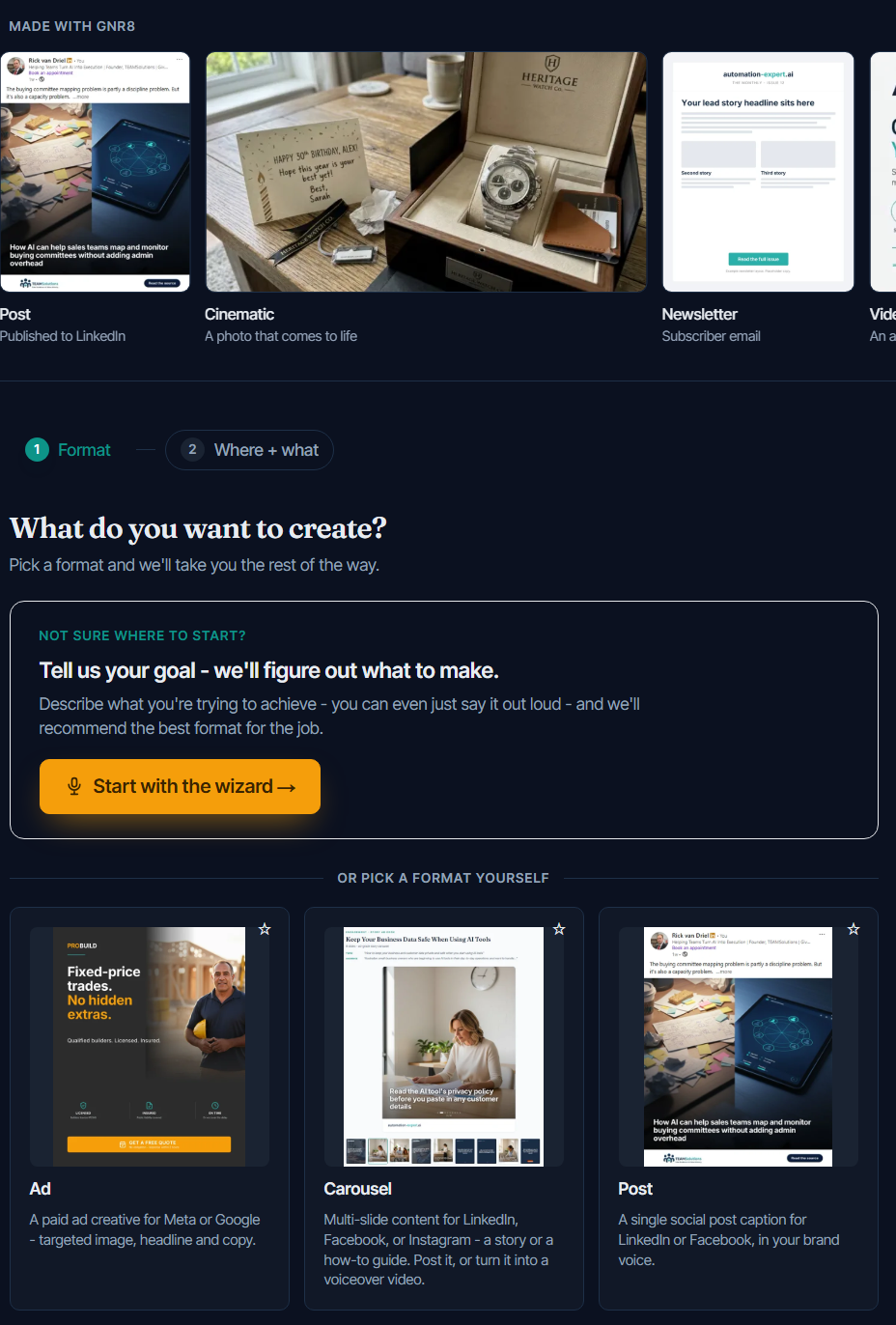
A live AI marketing and outbound platform that moved the problem from content generation into planning, targeting, approvals, scheduling and external execution.
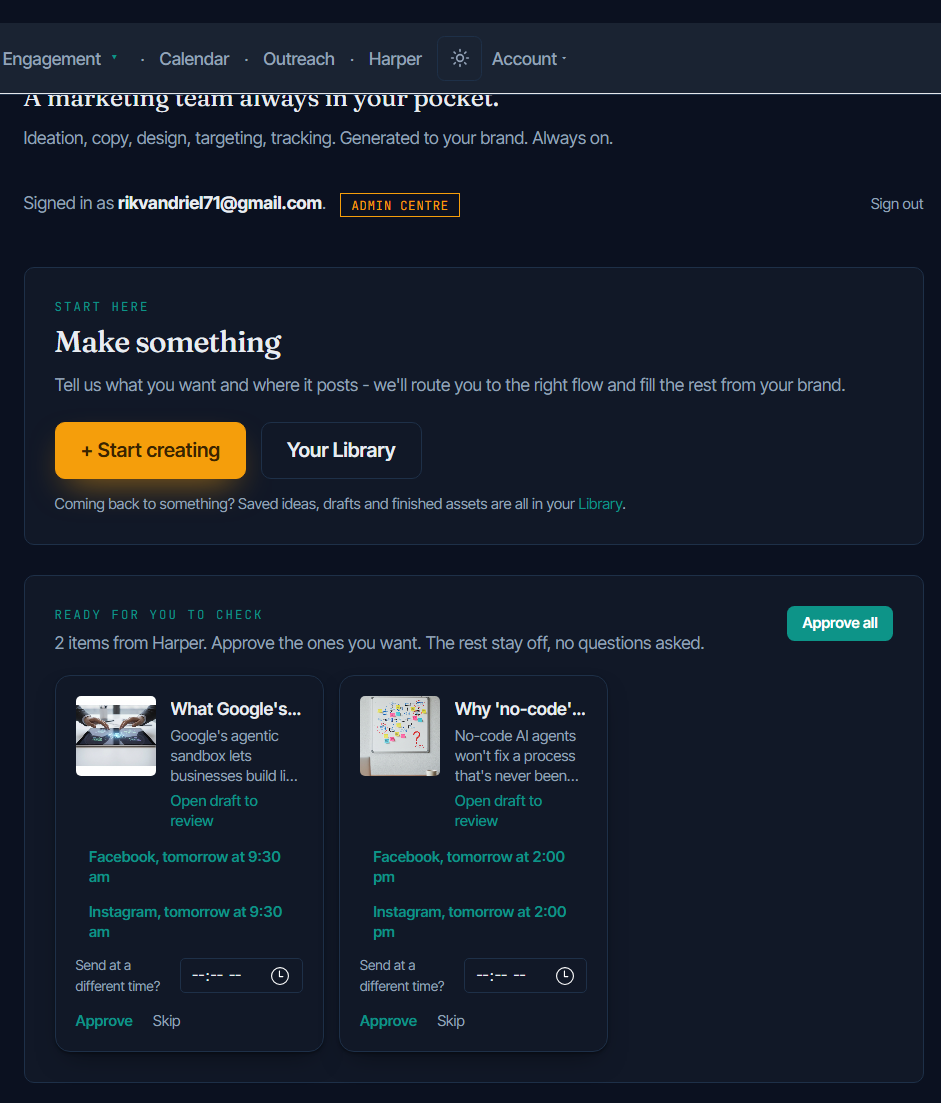
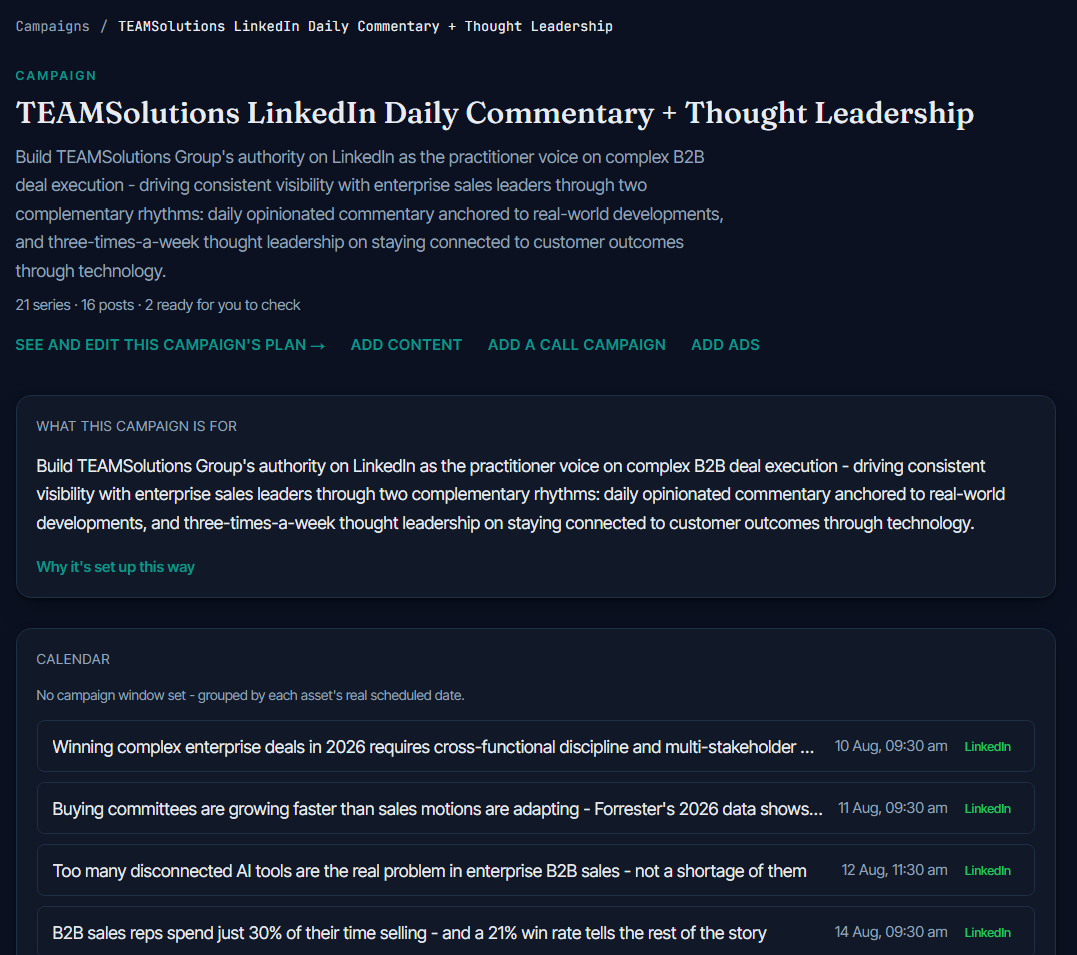
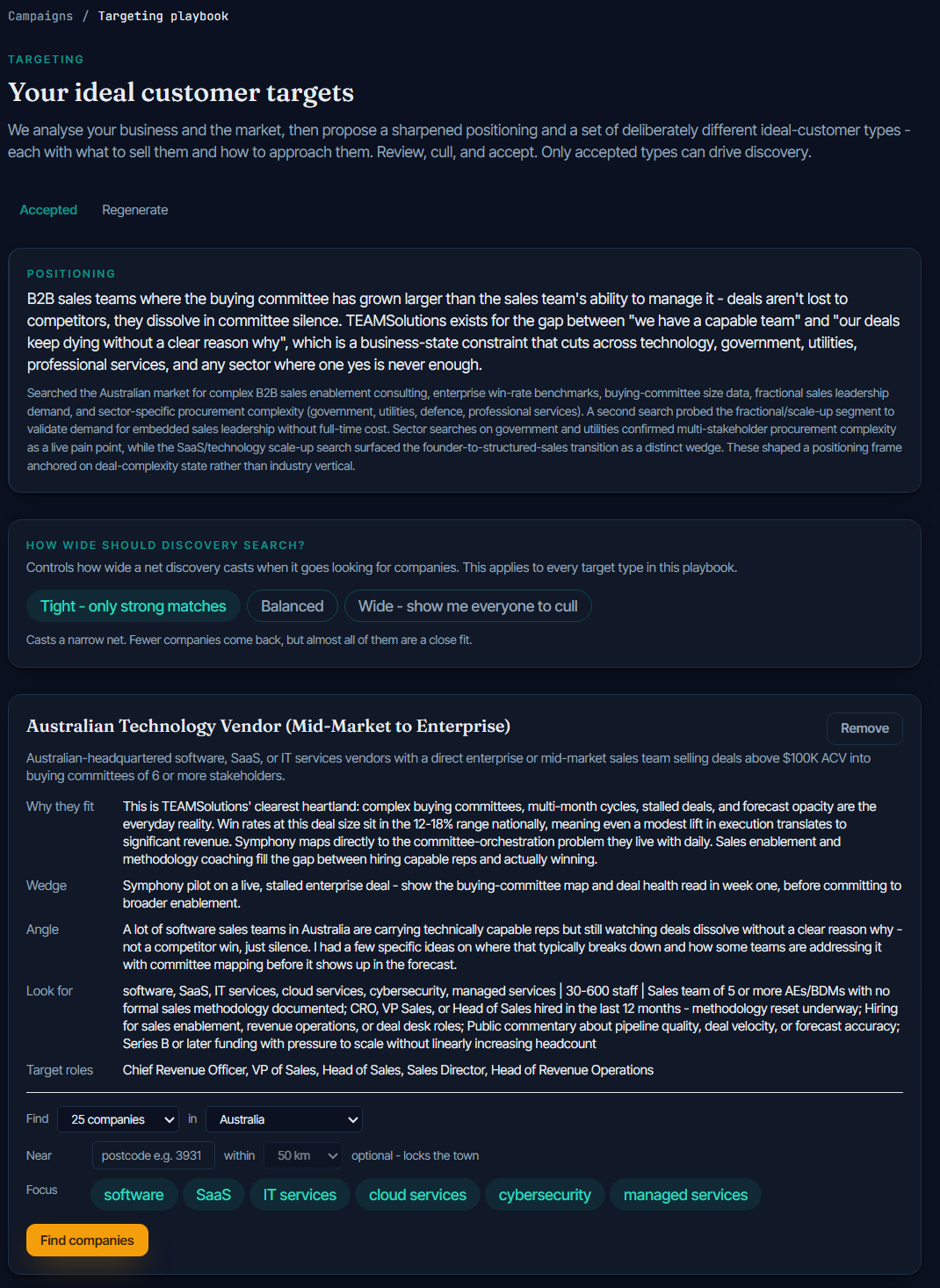
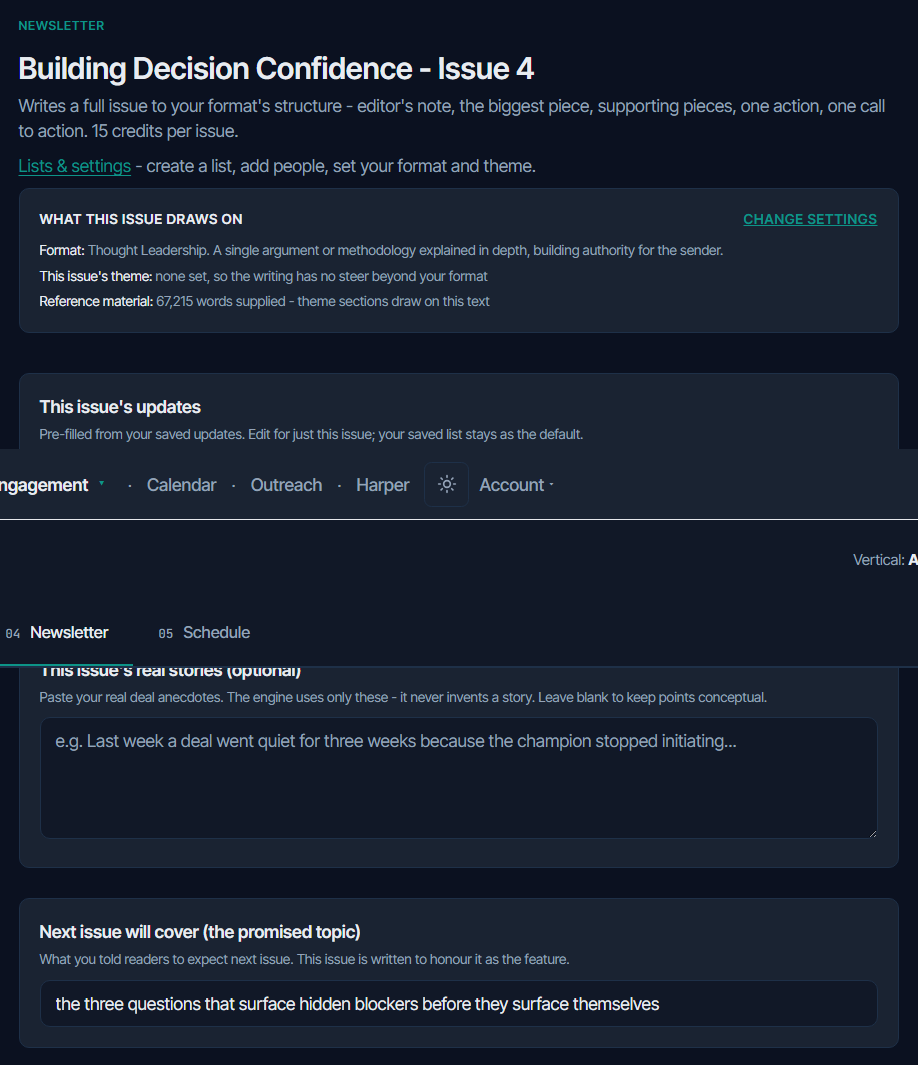
GNR8 in motion: Harper planning and approvals, campaign structure, ICP targeting, grounded long-form output and content creation across channels.
The problem
Small and mid-sized businesses do not need another disconnected AI writing tool. They need the work between an objective and a finished market action to disappear: research, ideas, content, targeting, scheduling, approvals and follow-up.
GNR8 started as a content platform and evolved into a broader operating environment for marketing and outbound work.
Harper: from prompt to operating agent
Harper is the agentic layer. The goal is not simply to answer a request. It is to understand the business context, research the market, identify missing information, propose a plan, work within finite credits or budget, create the required assets, route them through human approval, then execute across connected channels.
Objective → context → research → plan → finite resources → create → approve → schedule → execute.
From generation into action
That changed the engineering problem. Once the system can publish, email, message, call or spend money, content quality is only one part of the risk. Permissions, tenant boundaries, compliance, data provenance, approvals and observable actions become equally important.
Harper surfaces work that is ready for human review, while keeping unapproved items off. The human remains the authority boundary.Campaigns are structured around a purpose, cadence and planned series rather than isolated prompts.The platform researches the market, proposes deliberately different ICPs, explains why they fit and only allows accepted targets to drive discovery.Long-form output can be grounded in supplied reference material and optional real anecdotes rather than invented stories.A user can start with a business goal or choose a specific format, with the platform routing them into the appropriate workflow.
Architecture in practice
GNR8 has become the broadest multi-model environment I have built because the workflow crosses reasoning, research, image generation, video, voice, publishing and outbound action.
ReasoningAnthropic, OpenAI and Google GenAI are used across different planning, generation and analysis workloads rather than forcing every task through one provider.
Mediafal.ai, Kling, Veo and HeyGen support image, video and avatar workflows, with rendering and composition handled separately where deterministic output matters.
Voice + outboundGoogle speech services, Retell and telephony integrations support narration, transcription and AI-assisted outbound workflows.
Platform + executionNext.js, Supabase, Vercel, Resend and Zernio provide the application, tenant isolation, delivery and connected social-publishing layer.
Models are components. The durable architecture is the workflow, its controls and the capability it delivers.
Industrial AI translation
Harper is useful evidence because it is not simply generating content. It receives an objective, researches, plans within finite resources, asks for approval where needed and can execute through connected services.
GNR8 patternObjective → context → research → constraints → plan → approval → execution → performance feedback.
Industrial translationService objective → work demand + crew skills + location + parts + weather + customer priority → proposed schedule or intervention → approval where required → execution through connected systems.
Once AI can act, authority, constraints, approvals and observability become part of the solution.
What I learned
GNR8 reinforced a principle that now appears across most of my AI work: the more capable the agent becomes, the more the surrounding software matters. The LLM can reason and create, but deterministic software should enforce permissions, budgets, compliance rules, tenant isolation and whether an external action is actually allowed to occur.